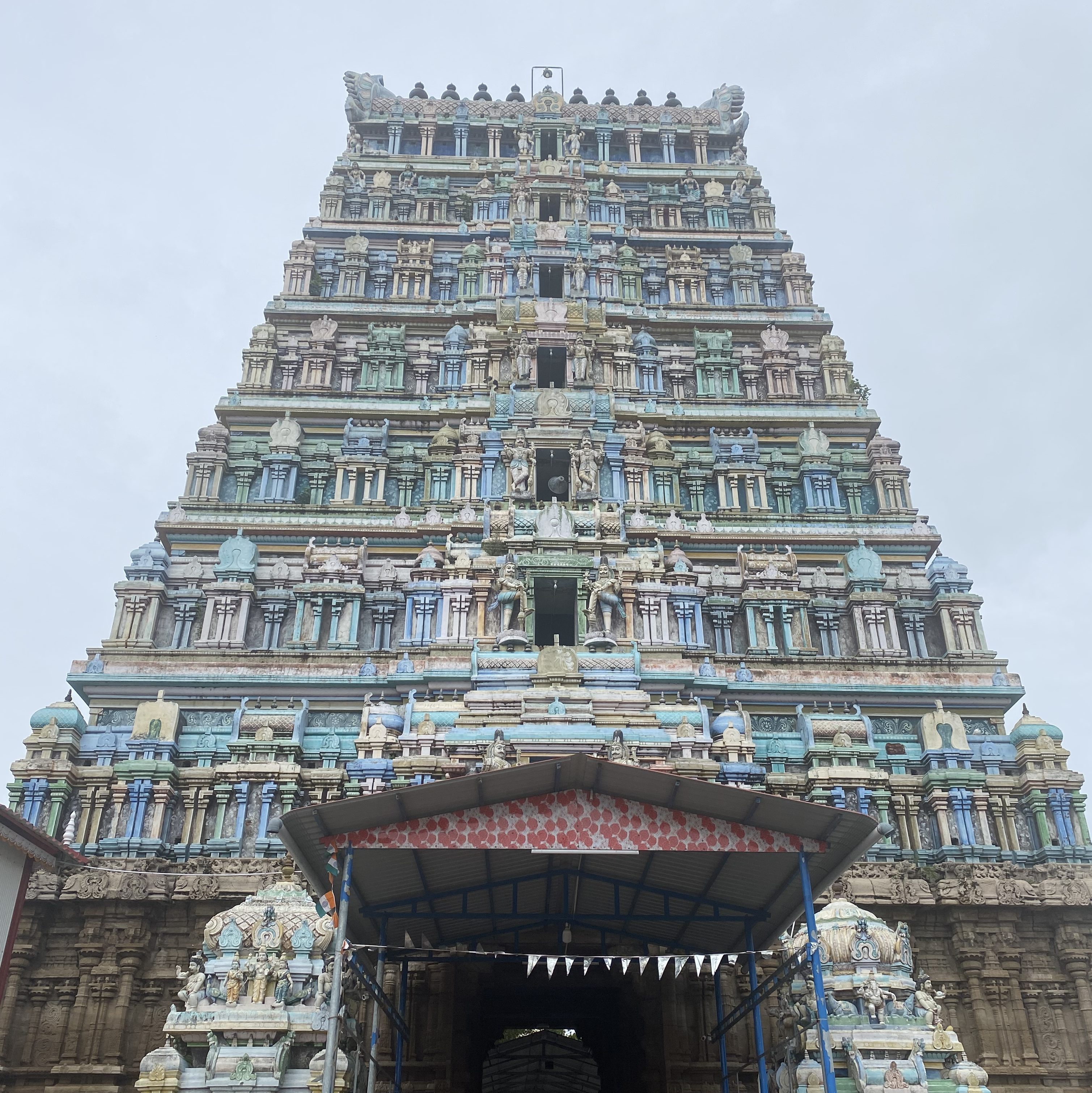
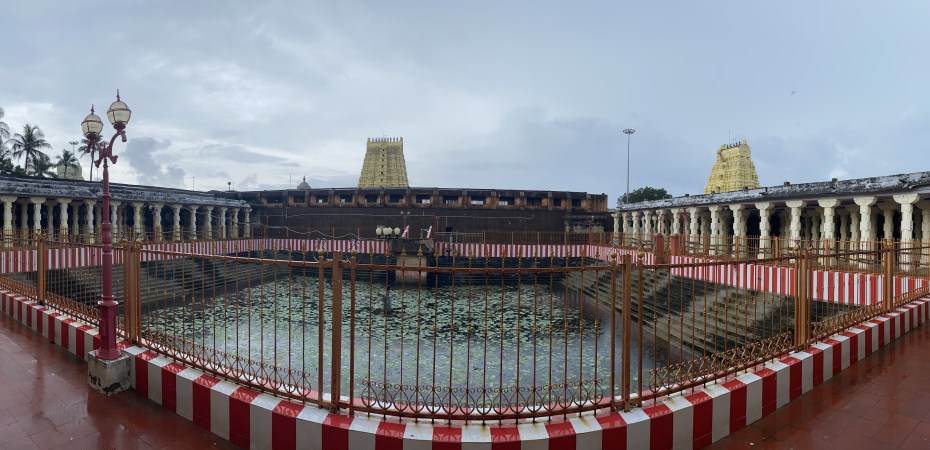
One of the holiest pilgrimage destinations in India, Rameswaram is situated in the Pamban island off the south east coast of Tamil Nadu. According to the puranas, it is located on an island on a hillock called “Gandhamadhana parvam”.
Sthala Puranam
After defeating and killing the asura king Ravana and retrieving Sita from Lanka, Rama is believed to have propitiated Shiva here as “Ramalinga”. Ravana, though a brahmana, was still an asura by his qualities and had to be vanquished which was the divine purpose of the Rama avatar. However, to absolve himself of the sin of killing a brahmana (Brahmahathi dosham), Rama still had to perform this penance.
The temple itself is a magnificent construction, built in the 12th century – with its most famous “3rd corridor” having 1212 pillars. There are 22 wells with perennial springs and considered holy theerthams and it is customary to bathe in all these waters starting with the “Agni Theertham” – the waters of the ocean itself and finishing off with “Koti theertham” – which is believed to have all the holy waters in it.
The Sethu Madhava shrine inside the temple, is one of the Pancha Madhava khsetrams (others being Bindhu Madhava, Veni Madhava, Kunti Madhava, Sundara Madhava). Pretty much every corner of this temple has a story from the puranas associated with it. Temples for “Ramar Paadam” and “Sakshi Hanuman”(the point from which Hanuman leapt off to Lanka in search of Sita) are closeby.
The essence of the Rameswaram and its prabhaavam is very beautifully expressed in the kriti “Ramanatham Bhajeham” and Muthuswamy Dikshitar describes Ramanathaswamy as “Hamsa Sohakaaram” , the embodiment of the mantra “Hamsa Soham” (I am That).
“Ramanatham Bhajeham”
Rameswaram is one of the 12 jyotirlingam temples in India (Ramanathaswamy is the only jyotirlingam in Tamil Nadu , Maharashtra having the maximum). This kshetram – for the consort Parvathavardini – is also one of the 51 Shaktipeetams (sethu peetam) in India.
 Kshetra Kshetrajna Yatra