Vedic astrology/calendars use multiple methods to account for passage of time and to mark the occurrence of events of importance. One is the Chandramāna method in which the phase of the moon is the basis for calculations. This has two submethods – amāntha, where the new moon is the marker (the lunar month begins on the day after new moon) and pūrnithāntha where the full moon is the marker. The Souramāna calendar uses the sun to mark certain events, and uses the entry of the sun’s path into each one of the zodiacal constellations. As a result, lunar and solar calendars have offsets back and forth due to the difference in lunar and solar months or years. The lunar months are determined , and consequently named by the asterism closest to the full moon in that time period whereas the solar month is determined and named by the zodical path that the sun traverses.
The 8th month in the Hindu lunar calendar is Karthigai. The month is named so because the full moon in that month is closest to the Kritikkā asterism. In the solar calendar, the month of Karthik is the 7th and is called “Thula” corresponding to the sun sign Libra.
Now, the Krittikā asterism is actually a cluster of 7 stars of which 6 are the most prominent and referred to as the krittika sisters who are said to be the foster mothers of Kartikeya (who manifested from the sparks from Shiva’s third eye). For this reason, the month of Karthigai holds special significance for worshipers of (Karthikeya)Subhramanya.
For astronomic observation purposes, this asterism is in the constellation of Taurus, referred to as the Pleiades star cluster. There are references in Greek Mythology to the “seven sisters” in conjunction with the Full moon. While the star cluster Krittikā/seven sisters, across cultures represents nurturing – in vedic astrology , it is associated with the power of Agni – for its transformative, cleansing energy.
The month of Karthigai is the penultimate month of the year and the Dakshināyana phase (southward travel of the Sun), generally a period of sādhana/introspection. This time period has special significance in spiritual discipline, and the “aligning of stars” that provides clarity of thought by destroying the darkness of ignorance. The time period on earth that coincides with the start of the brahmamuhurtha or amrithakāla of the devas, and signals the culmination of that sādhana.
In the southern part of India, the deepa festival (also called Karthigai deepam), is celebrated in the lunar month of Karthigai when the asterism of Krittika is prominent (full moon could or not be on the exact same day, but usually no more than a few hours lag). In some other parts of India that follow the solar calendar, “Kartik Pūrnima” is celebrated almost one month earlier. There are years when both the solar and lunar calendars coincide but the significance, reasons and practice remain unchanged.
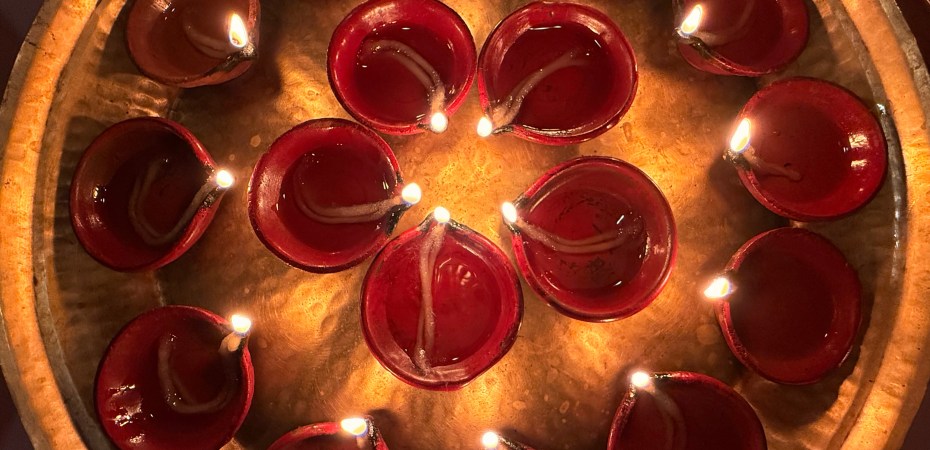
People generally observe the month of Karthigai (or Karthik) by lighting lamps inside and outside their homes. A practice which must have been necessitated by the darkness that sets in earlier in the winter months and also as a reminder to put one self on the path of spiritual awakening.
Light/Fire, which is the first perceivable form of creation has been revered from time immemorial, across civilizations and culture. Lighting lamps, is a practice that symbolizes destruction of ignorance, leading to realization.
Significant events in the month of Karthik/Karthigai
The third day (Tritiya) after new moon on Deepavali , known as bhratru jayanthi – is believed to be the day the river goddess Yamuna invites her brother Yama to her home and seeks his blessings. Observance of this day, where sisters light lamps and host their brothers is believed to foster family bonding and praying to Yama blesses one with longevity.
Bhairava, the fierce form of Shiva and generally the guardian deity of a kshetra (kshetrapālaka) is believed to have appeared on an ashtami (8th day after the new moon) in the month of karthigai. Bhairava removes the face of ego from the five headed Brahma who we now see represented as four faced on this Bhairavashtami day.
The full moon following Deepavali, is called “Deva Deepavali” or “Deepa Deepavali/Deepotsvam“. Tripurantaka/Tripurari vaibhavam is remembered and celebrated on this day when Shiva, as Tripurari riding on a chariot made with the elements of the earth as his chariot (Avani ratha) with the Sun and Moon as the wheels of the chariot, the Meru moutain bent as His bow, Vishnu who offers to be the arrow – destroys the three asuras Tārakakshan, Kamalākshan and Vidyunmāli, with just a hint of a smile.
Karthigai deepam
Karthigai deepam celebrates the cosmic event of Shiva appearing as a pillar of fire to end a dispute between Brahma and Vishnu as to who was superior. Brahma assumes the form of swan seeking to find the beginning soaring to the skies while Vishnu takes the form of a boar seeking the end below the earth. The supreme being, has no beginning or end, and this truth was realized. This form of Shiva is represented as Lingodbhava murthy in Shiva temples.
There, is a far more significant aspect of this celebration. Again from the puranas, there is an account of how Parvati observed severe austeries and penances at Māngādu and then Kānchipuram and as a result wedded Shiva. However, the goddess still not content with being viewed as a separate entity from Shiva. She observed the Kedara-Gouri vrata (21 days before Deepavali) after which she continues Her austerities around the hill of Arunachala during the month of karthigai. As a culmination of this penance, she becomes one with the brilliant form of Mahadeva and together they shine as Ardhanāriswara. Karthigai deepam day commemorates this union of Shiva & Shakthi.
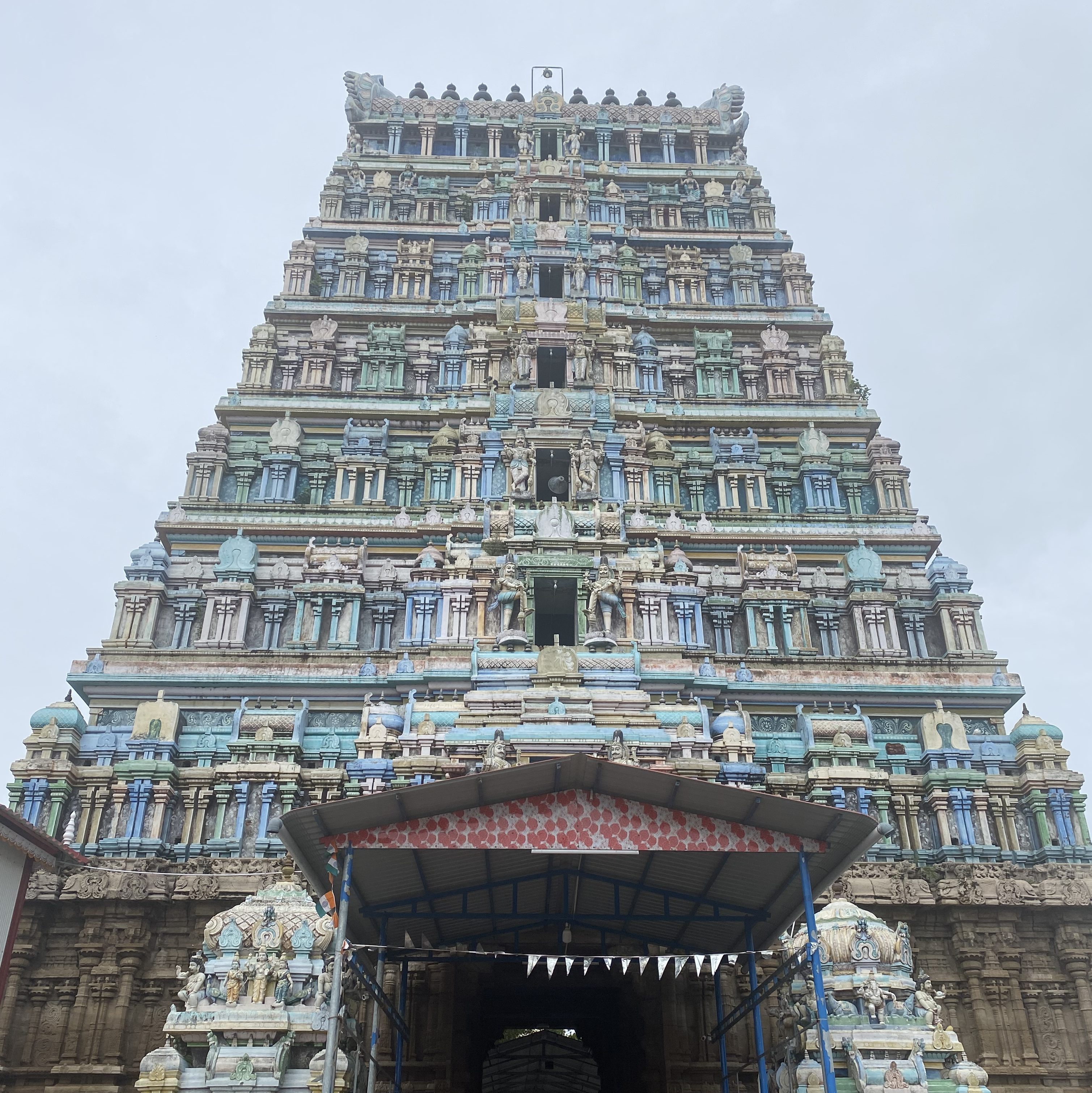
In the temple town of Tiruvannamalai or Arunachala1, which is the place where the vaibhavam believed to have happened, the Karthigai deepam festival is carried out over a period of 10 days (Brahmotsavam) with the grand finale on the tenth day, showcasing the appearance of Ardhanariswara and simultaneous lighting of a massive lamp on the hill top.
- Tiruvannamalai/Arunachala is one of the pancha bhootha sthalams, representing the fire element of the cosmos/creation. It was once in a massive molten state of fire which later solidified to the rock state it is in currently. Geological studies and carbon dating of samples from this mountain have determined the rocks to be igneous and around 4000-4500 million years old, with the rocks solidifying around 3000 million years ago. ↩︎
 Kshetra Kshetrajna Yatra