Incarnation as Ayyappan (Manikantan)
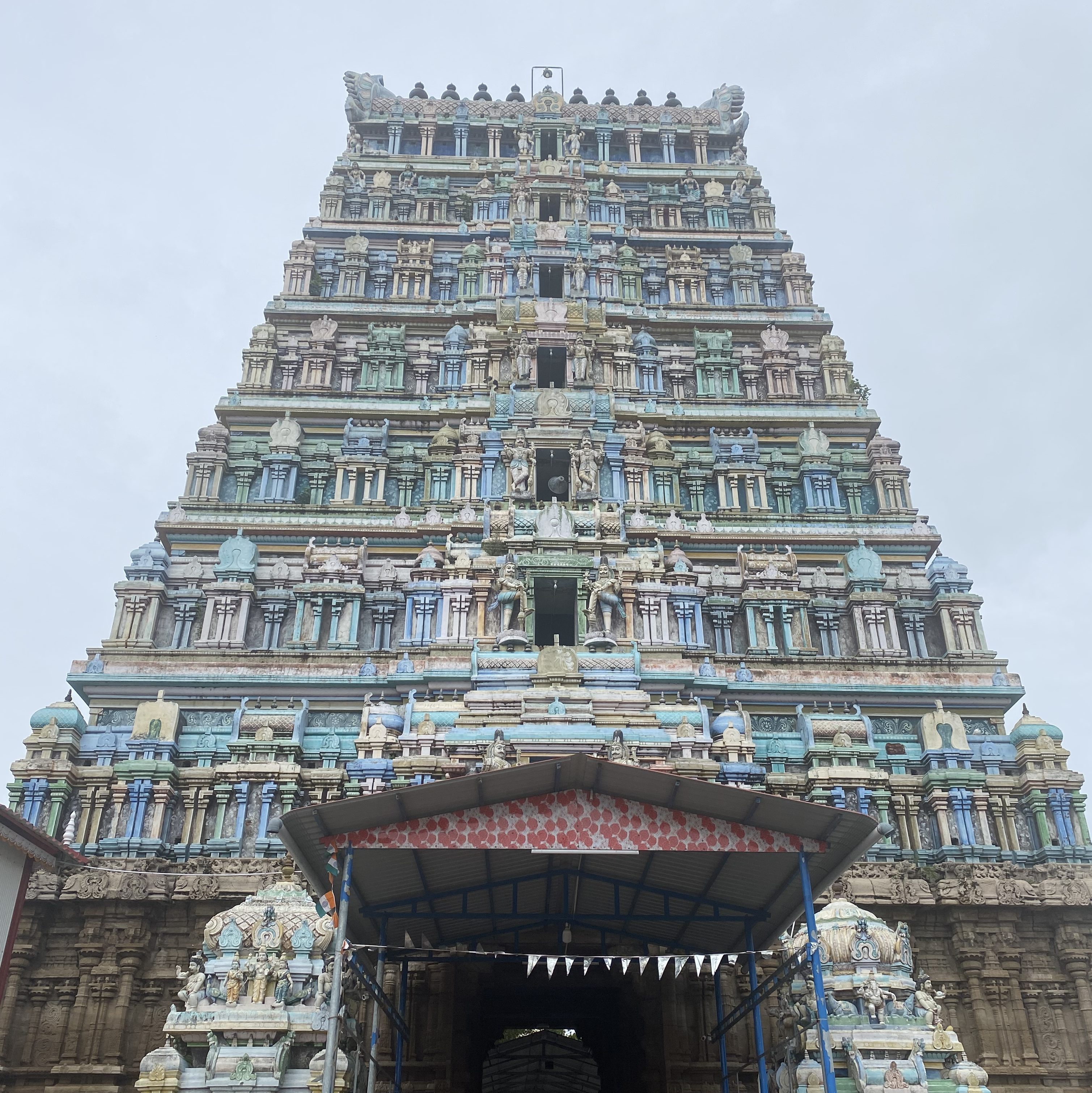
In the yuga of Kali, Shāstha worship is most popularly upheld by way of undertaking a yātra to Sabarimala and propitiating the form we know as Ayyappan.
The Bhuthanatha Upākyānam (which is part of the Brahmānda purānam) provides details of Shāstha and the manifestations including the Dharma Shāstha/Ayyappa, as the Guru/teacher in the Kali Yuga1.
In this upākyana, it is said that rishi Sūta gives a discourse to the assembly of 88,000 sages in the forest of Naimishāranya about a deity who would be the guiding force for the people in Kali yuga and protect them during the turbulences that are characteristic of that yuga. Sūta describes (to Suka and rishis) the form of Shāsta/Hariharaputra who will incarnate as Manikanta (for the purpose of vanquishing the demoness Mahishi2 (the sister of Mahishasura who is destroyed by goddess Durga). Suta also describes the source form “Ādya Shāstha” and the “Hariharaputra” manifestation from which other forms incarnate, including that of Dharma Shāsta who will appear near the river Pamba (dakshina Ganga), as a warrior riding on a tigress, and the one who will establish himself on the yoga peetam of sabarimala with the sole pupose of upkeeping Dharma, as a teacher/ruler providing liberation to those who seek him after undertaking the vratam of 41 days.
Parasurama’s role
The incarnation of Ayyappan takes place in Trétha Yuga during the time of Parasurāma and Ramāyana3.
The legend is that, Parasurāma, after defeating all the tyrannical kings, claimed a part of the land (that now extends from Gokarna to Kanyakumari) as Parasurāma Kshetram (or, the Land of Parasurāma). Concerned about the upholding of dharma in the coming years and mainly Kali yuga, he propitiates Shāstha and is thus directed (by Dharma Shāstha) to establish a sanctum for his incarnation as Ayyappa at 18 kshetras4 out of which Sabarimala comes to be the most prominent one.
The speciality of Sabarimala is that it is believed that the construction of the shrine, including the 18 steps5 that lead to the sanctum and the rules of undertaking a yatra to Sabarimala (yatra vidhi) are given to Parasurama and Rajasekhara pandiyan (who fosters Manikanat avataram) by Shāstha himself. This sthala purana is recorded in the narrative of suta purānikar.
The Shāpa(curse) of Gautama Rishi
It is said that those who have the benediction of being able to worship of Shāstha happened during the Krita Yuga.
During a time of great famine (due to lack rain for 33 years), Gautama rishi’s ashram alone was spared since he propitiated Shāstha, and was spared of the effects of Karma. Since he had supplies in abundance , people flocked to his ashram and also received materials for their sustenance. It is said that Indra, the king of gods and the one who controlled the cycle of rainfall, grew jealous and spread a rumor that the rishi was producing all this bounty through some sort black magic and sends a illusory cow to the ashram to make people believe his rumor. As expected the illusory cow dies and people begin to doubt the rishi and accost him with their aspersions. Disappointed that people have lost the discernment between real and unreal, he curses them that they will forget their swadharma. The people realize their folly and consequently Gautama rishi delays the effects of the curse to manifest only in the Kali Yuga. He foresees that the prabhava of Shāstha will be known in Kali yuga and the worship of Shāstha with sharanāgathi will relieve them of this curse. Only those ,who as a result of the good karma they accumulate until their rebirth in Kali Yuga, will even hear about such a deity and furthermore be able to worship him.
Sthala and Teertha
The triad of Sabarimala, the river Pamba and Ayyappa are inseparable.
The pamba river is said to be “Dakshina Ganga” as it is also said to be one of the streams that went underground after emerging from the matted locks of Shiva and emerged in the region that we now know as Parasurama Kshetram. It is on the banks of the Pamba, that Parasurama is directed by Shāstha himself to construct a shrine.
The King, Rajasekhara Pandian discovers the baby boy Manikantan, who is none other that Hariharaputra who incarnates to destroy the demoness Mahishi, on the banks of the Pamba river.
The area around Pamba river was previously known as Mathanga vanam(forest) after the sage Mathanga who lived there. Sabari who served Mathanga rishi attained moksha after she had the darshan of Lord Rama who visited her hermitage. Mathanga Rishi who was a devi upasaka, had constructed a Sri Chakra peetam for his worship. The mahayoga peetam atop which the idol of Dharma Shāstha in yogic form resides, is the same Sri Chakra peetam revered by Mathanga rishi.
The incidents leading to Shāstha’s manifestation as Manikanta starting with the purpose and intention in Krita Yuga, incarnation in Treta Yuga and further worship in Kali Yuga, though seemingly random on cursory glance, are much more delibrate, like pieces of a puzzle that fall in place to create the big picture.
Mandala vratam and Makara darsanam
The procedures for visiting Sabaramalai require that one follows a ‘vratam’ (or penance) for a period of 40 days (Mandala) observing strict ways of living for that time period. Devotees visit various Ayyappa shrines during this time and finally, during the time of Makara Sankranthi, visit the sanctum in Sabarimalai.
This journey is believed to be an act of self discovery and with repeated practice enables one to reach the final destination of self realization. It is likened to the practice of kundalini yoga but with an approach that is more suited for non-experts. This observation of sabarimalai yatra and vratam is a journey of the self while navigating the varioius chakras.
Usually the journey starts with worshipping the form of Shāstha known as Adi Shāstha at Pon Srimuthu Ayyanar kovil, the Muladhara sthalam. Then at Acchan kovil, as Kalyana Shāstha with his consorts Purna and Pushkala representing the Swadishtana. The Manipuraka sthalam is Ariyan kavu where he is Arya Shāstha with his consort Praba and son Satyakan. Erumeli for Kirata Shāstha is the Vishudhdhi sthalam (which is the step in the journey where all ego/inner toxicity needs to be given up) before reaching the Agnya chakra sthalam of Sabarimalai where only pure Gnana or wisdom can exist as Dharma Shāstha resides there in yogic penance on the Mahayoga peetam.
Makara sankramanam, also commonly referred to as Uttarayana, the time during which devotees complete their mandala vratam and receive darshan at Sabarimalai has several points of significance associated with it.
It is the time, when Dharma Shāstha/Ayyappa seated on the mahayoga peetam in a yogic trance (yoga nidra) , opens his eyes briefly to grace the devotees before going back to his tapas.
Incarnation of Shāstha as Manikanta is said to have happened during this period of transition (sankramam) – when the Sun transitions from the constellation/zodiac of Sagittarius (month of Dhanur/Margazhi) to Capricorn (month of Makara/Thai) – on a saturday when the star of Uthiram (Leonis) is closest to the moon.
After Mahishi vatham, vision of Shastha in his jyothi form to the sages on the banks of the Pamba river, assuring them that he will continue to be the guiding force in Kali yuga also, happens during the Makara sankramam period.
After the purpose of his avataram as Manikantan is fulfilled, He promises his earthly father Rajasekhara Pandian that he will appear as a Rājadhirāja every Makara Sankaranthi.
Sabarimala is the place where all ignorance is destroyed before the soul receives the athma darisanam (vision) of the Supreme in his primordial form of a jyothi atop the Ponnambalamedu in forests of Kanthamalai. Athma darisnam materializes when the realization that happens in the Agnya chakra culminates as eternal bliss in the Sahasrara chakara. Only when this happens, is the vratam considered complete.
Swamiye Sharanam
Footnotes
- In Krita Yuga, Vishnu appears directly as himself to Dhruva
In Tretha Yuga, he takes the form of Dattātreya to be a Guru
In Dwāpara Yuga, he appears as Krishna Dwaipāyana (Vyāsa) to impart wisdom
In Kali Yuga, The Tāraka Brahmam is none other than Shāstha (Ayyappa) ↩︎ - Mahishi is said to have been Dattatreya’s spouse Lilavathi in Dvaparayuga who gets cursed to be born as as wild buffalo demoness due to her focus on lowly desires. Mahishi then performs intense penance that she will be vanquished only by a son born to Hari and Hara who who must have served as a earthly human being for 12 years. Dattarreya incarnates as Sundara Mahisha and son named Dundubi is born to them, This Dundubi is the same character that appears in Ramayana, who fights with Vāli and gets killed in the ensuing battle. ↩︎
- The conversation about such a incarnation happens even earlier, in the Krita (Satya yuga). Rama is believed to have worshipped Shāstha at Shāsthān kottai (now in Kerala, India) before proceeding with the army of monkeys to Lanka and bring back Seetha. ↩︎
- Five of the temples established by Parasurama, in particular, are representative of the 5 stages of evolution in a person’s life – Kulathupuzhai (Brahmacharya), Aryankavu (Grihastha), Achchan kovil (vanaprastha), Sabarimalai (Sanyasa) and Kanthamalai (Final state of union with the paraBrahmam) ↩︎
- The 18 steps are symbolic of the 18 different hurdles that one needs to conquer before attaining true wisdom. They are the 5 sensory Indriyas (smell,sight,hearing,taste and speech), 8(ashta) rāgās(kama,krodha,lobha, moha, mada, matsarya, raga,dvesha), 3 gunās (satva, rajas and. tamas) and the 2 states of learning (vidyā and avidyā). ↩︎
 Kshetra Kshetrajna Yatra